When should you double down in blackjack? In practical terms, you double when one additional card is likely to turn a good drawing hand into a strong final total, and the table rules give you enough edge to justify increasing your stake. To apply this confidently, you must read the rules shown in each game interface.
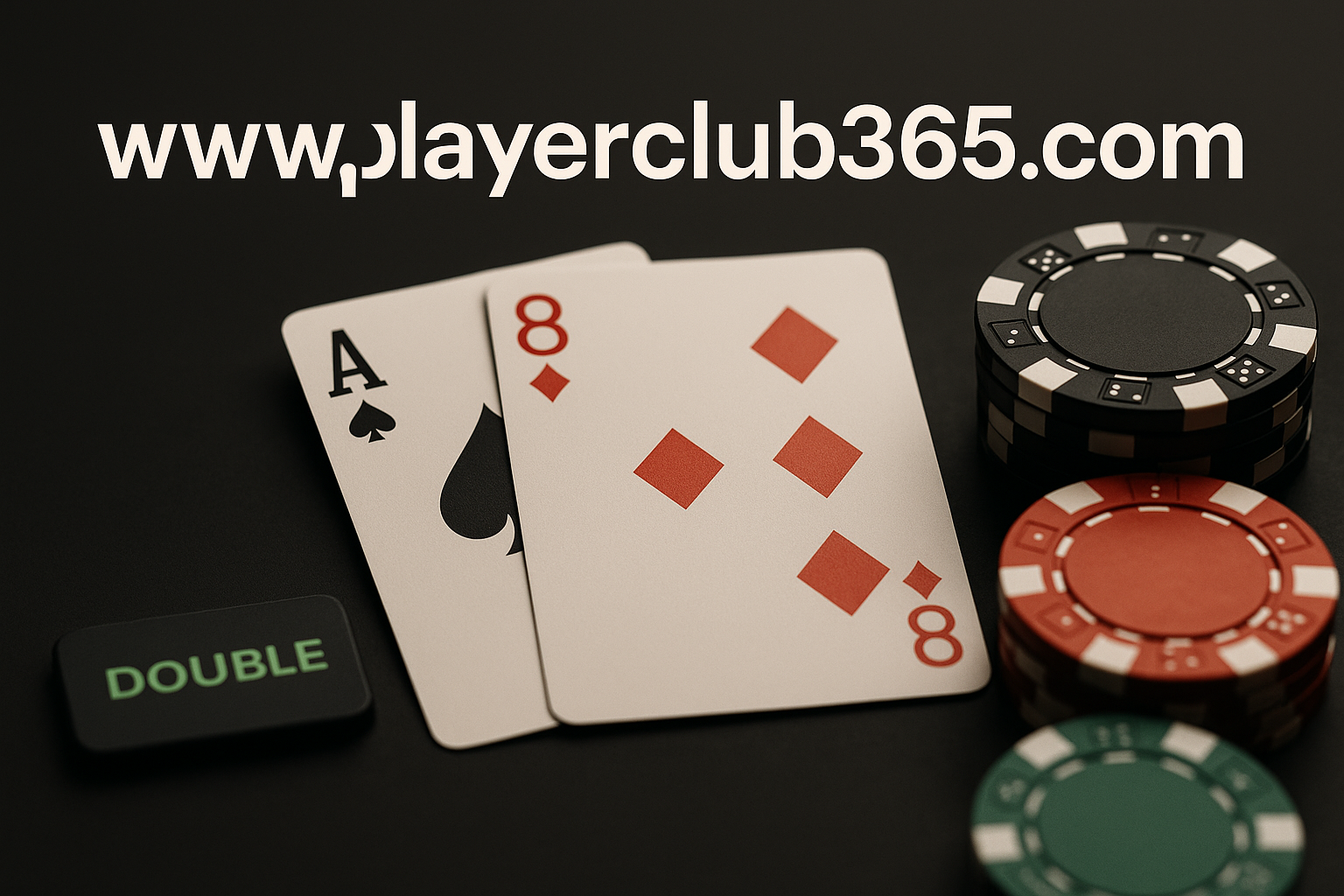
When should you double down in blackjack? The short answer
You should double down in blackjack when taking exactly one more card has a positive long-term expectation under the table rules. In standard games, this usually means doubling hard 9, 10, or 11 against weak or neutral dealer cards, and doubling soft 13 to 18 against specific dealer upcards that are more likely to bust.
Core strategy: hard total double-down rules
For most regular blackjack formats where doubling is allowed on any first two cards, these baseline hard-hand doubles are a conservative, mathematically supported starting point:
- Hard 11: double against any dealer upcard, unless the specific table bans doubling.
- Hard 10: double against dealer 2 to 9, but hit against dealer 10 or Ace.
- Hard 9: double against dealer 3 to 6, otherwise hit.
These positions work because a single card often lifts you to 19 to 21 while the dealer is either under pressure to hit or showing a non-dominant card.
Soft hands: when the Ace protects your double
Soft totals (one Ace counted as 11) let you double more safely because that Ace can revert to 1 if you draw a higher card. Common soft double situations are:
- Soft 13 to 14 (A,2 or A,3): double against dealer 5 or 6, otherwise hit.
- Soft 15 to 16 (A,4 or A,5): double against dealer 4 to 6.
- Soft 17 (A,6): double against dealer 3 to 6.
- Soft 18 (A,7): often double against dealer 3 to 6, stand against 2, 7, or 8, and hit against 9, 10, or Ace.
If a table uses a rule where the dealer hits soft 17, some soft doubles become slightly less favorable, so treat the on-screen rules as your first reference point.
Fast-reference double-down checklist
The table below summarizes common double-down scenarios you can confirm quickly during play:
- Your hand: Hard 11 - Dealer upcard: Any - Default action: Double
- Your hand: Hard 10 - Dealer upcard: 2 to 9 - Default action: Double
- Your hand: Hard 9 - Dealer upcard: 3 to 6 - Default action: Double
- Your hand: Soft 17 (A,6) - Dealer upcard: 3 to 6 - Default action: Double
- Your hand: Soft 18 (A,7) - Dealer upcard: 3 to 6 - Default action: Double in many standard rule sets
Why table rules matter for doubling down
Before applying any double-down chart, verify the rule panel in the game UI. Important details include:
- Number of decks, which affects card distribution and house edge.
- Dealer soft 17 rule (hit or stand), which shifts edge in marginal spots.
- Double permissions (on any two cards or restricted to 9 to 11 only).
- Split and re-split rules, which change how often you will see double opportunities after splits.
Clear labeling of these items, visible buttons for Double, Stand, Hit, and easy access to limits and time controls all support more disciplined blackjack decisions.
Using PlayerClub365 to apply your double-down plan
When should you double down in blackjack? The most consistent approach is to match these hard and soft hand rules with the exact table configuration you see on screen. On PlayerClub365.com, you can review rule notes while exploring each game section, from Table Games to the dedicated Blackjack category, then practice recognizing your best double-down spots.
Play Blackjack at PlayerClub365